Is a Sapphire Crystal on a Watch Good? Pros and Cons
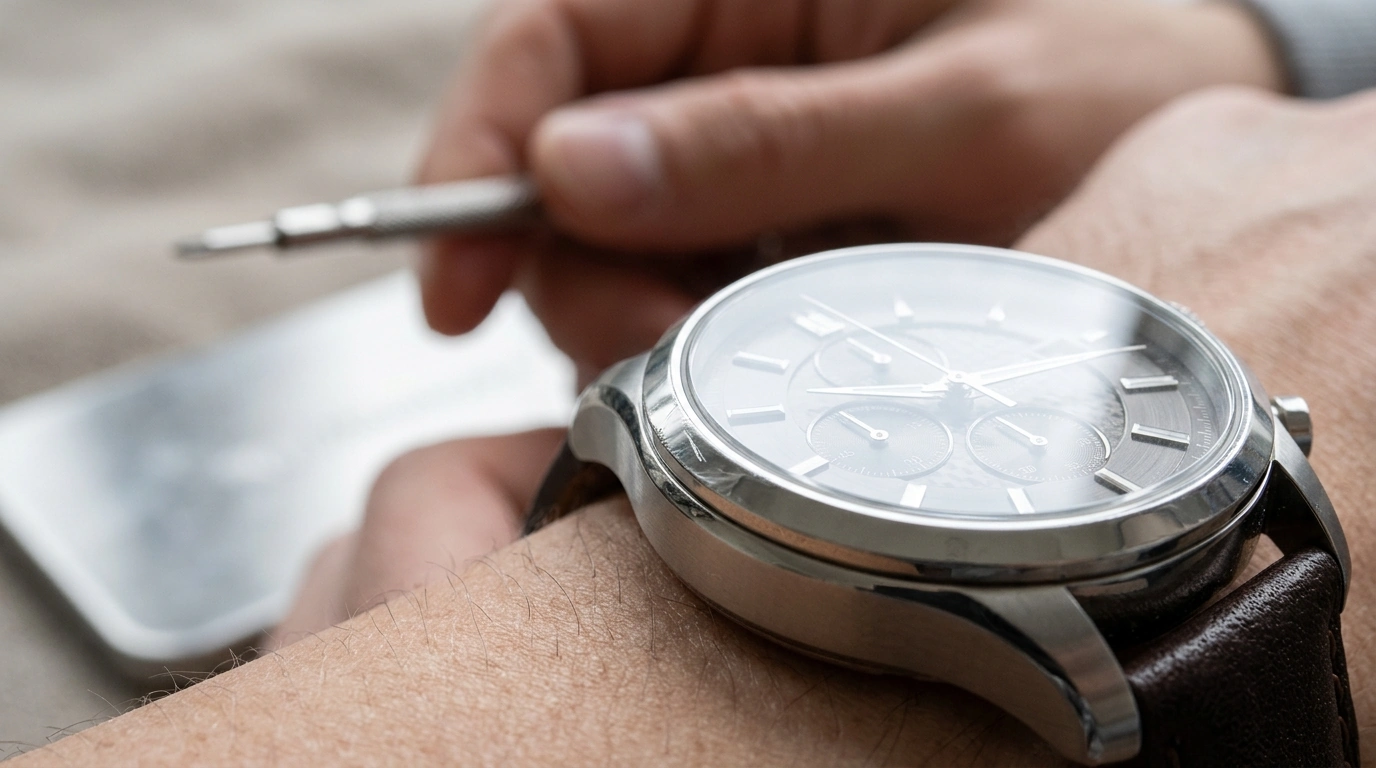
Is a sapphire crystal on a watch good?
Yes. A sapphire crystal is a good choice if you want a watch face that resists scratches from everyday wear. It is much harder than the mineral glass used on many watches, so it is less likely to pick up marks when you brush against a desk, door frame, or other common surfaces.
Watch crystals are usually made from synthetic sapphire, a manufactured material with the same basic composition as natural sapphire. It is clear and durable, making it a practical upgrade for a watch you plan to wear often.
What are the advantages of sapphire crystal?
The biggest benefit is scratch resistance. Sapphire ranks just below diamond on the Mohs hardness scale, which helps it keep a clear view of the dial over time. That can be especially useful on a daily watch, where small scrapes are difficult to avoid.
Sapphire also offers a crisp view of the hands and markers. Some watches add an anti-reflective coating to reduce glare, although the coating itself may be easier to scratch than the sapphire beneath it.
Does sapphire crystal have any drawbacks?
Sapphire is scratch-resistant, not scratch-proof. A diamond or another sufficiently hard material can still mark it. It can also chip or crack from a strong impact, particularly around an exposed edge.
A watch with sapphire may cost more than a comparable model with mineral glass or acrylic. Replacing a damaged sapphire crystal can also be more expensive, so it is worth considering both durability and your budget.
Should you choose a watch with sapphire crystal?
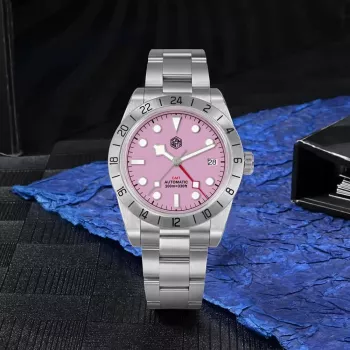
We recommend sapphire if keeping the dial clear is a priority and you wear your watch regularly. It is a useful feature on a GMT watch, where an unobstructed view helps you read the additional time-zone hand and scale.
If you are comparing styles, our guide to a 39mm automatic GMT watch with a pink dial and sapphire crystal brings that feature together with the watch’s other design details.
FAQ
How should you clean a sapphire watch crystal?
Wipe it gently with a clean microfiber cloth to remove fingerprints and dust. For stubborn marks, lightly dampen the cloth and dry the crystal afterward, taking care not to expose a non-water-resistant watch to moisture.












Leave a comment