Which Tent Fabric Is Most Waterproof? A Rain Guide

Which tent fabric is the most waterproof?
Polyester or nylon with a high-quality waterproof coating is generally the best choice when keeping rain out is your top priority. The coating and the way the tent is built matter as much as the base fabric: a well-sealed polyester tent can keep you drier than a nylon tent with an inadequate coating or unsealed seams.
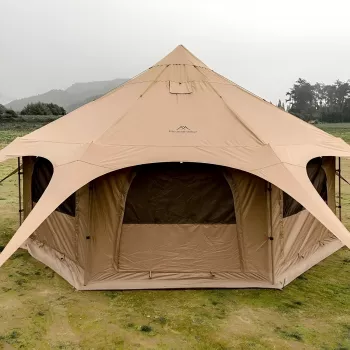
Our team recommends looking at the tent’s hydrostatic head rating, seam construction, and rainfly coverage together rather than choosing by fabric name alone. If you are considering a roomy cotton shelter, explore our guide to a yurt-style waterproof cotton tent for more basecamp guidance.
How do polyester, nylon, and cotton compare in rain?
Is polyester a good waterproof tent fabric?
Polyester is a practical choice for wet-weather camping because it absorbs relatively little water and stretches less when wet than nylon. It is commonly paired with a polyurethane coating to form a waterproof rainfly. Polyester also tends to resist UV damage better than nylon, although prolonged sun exposure can weaken either material.
What about coated nylon?
Coated nylon offers an excellent strength-to-weight ratio, making it popular for lightweight tents. Silicone-coated nylon can provide strong water resistance, but nylon may sag as it absorbs moisture. You may need to retension the rainfly during a long, wet trip.
Can cotton canvas keep rain out?
Yes. Cotton canvas can provide effective rain protection when properly treated and maintained. Its fibers swell when wet, helping close small gaps in the weave. Cotton is heavier and takes longer to dry than synthetic fabric, so it is better suited to a basecamp where weight and drying time are less important.
What should you look for besides fabric?
A hydrostatic head rating measures how much water pressure a fabric can withstand. As a general guide, a rainfly rated at least 1,500 mm offers useful rain protection; a higher rating can provide an extra margin in sustained rain. Floors benefit from higher ratings because your weight puts pressure on wet ground.
We also suggest choosing a rainfly that covers exposed tent walls, sealed or sealable seams, and a raised bathtub-style floor. Pitch the tent taut, keep the fly from touching the inner wall, and use ventilation to reduce condensation. Dry the tent before storage to protect coatings and prevent mildew.
FAQ
How do I reduce condensation inside a tent?
Open protected vents and allow airflow between the rainfly and inner tent while keeping rain out. Avoid cooking inside, and keep wet gear out of the sleeping area when possible.













Leave a comment