Why You Compare Yourself and How to Stop

Comparison can make someone else’s progress feel like evidence that you’re falling behind. A promotion, a relationship milestone, or a polished post can quickly turn into a judgment about your own life. But noticing those moments gives you a chance to respond with more curiosity and less self-criticism.
You don’t need to stop noticing other people’s accomplishments. The goal is to make room for your own priorities, recognize what you’re feeling, and choose your next step at a pace that works for you.
Why comparison can feel so automatic
We often use other people as reference points when assessing our progress, appearance, or abilities. You might look at a colleague to gauge your career growth or compare your routine with a friend’s to see whether you’re doing enough. In uncertain situations, those comparisons can feel like a way to find direction or reassurance.
Social media can make the habit especially noticeable because it places a steady stream of other people’s highlights in front of you. Career milestones, relationships, financial changes, and periods of transition can also bring comparison to the surface. When you’re unsure what comes next, someone else’s apparent certainty may seem particularly convincing.
Still, noticing the habit is not another reason to judge yourself. It’s a useful starting point: you can observe what happened before deciding what, if anything, needs to change.
Recognize the comparison loop
A comparison loop often begins with a trigger. You see a colleague’s announcement, interpret it as proof that you’re behind, and feel anxious or discouraged. You might then withdraw, criticize yourself, or rush into a goal that doesn’t actually matter to you.
Try slowing the loop down. Ask yourself: What did I see or hear? What feeling came up? What story did I immediately tell myself? Separating the situation from your interpretation gives you more choices about how to respond.
A gentler response to comparison
| Trigger | Automatic thought | Mindset reset |
|---|---|---|
| A colleague shares a promotion | I’m falling behind. | Their progress doesn’t define my timeline. |
| A polished social media post | Everyone else has it together. | A post shows only part of someone’s life. |
| A friend reaches a personal goal | I should be there too. | I can choose a next step that matters to me. |
A reset doesn’t require pretending you feel happy about everything. You can feel disappointed and still recognize that another person’s success is not a verdict on your worth.
Practice a mindset reset
When comparison catches your attention, start with a short pause. Name the emotion as specifically as you can: perhaps it’s envy, embarrassment, loneliness, or frustration. Then identify the thought attached to it. Writing down “I feel anxious because I’m telling myself I should be further along” can help you see the thought as a thought, rather than a fact.
Next, question the assumptions. Do you know the whole story behind what you saw? Are you measuring two different lives by the same deadline? Replace an absolute judgment with a statement you can honestly accept. For example, “I’ll never catch up” might become “I’m making progress in some areas, and I can decide what I want to work on next.”
Finally, choose one small action connected to your own values. If learning matters to you, set aside time to practice a skill. If connection matters, reach out to a friend. If you want more movement in your week, plan a ride that fits your schedule rather than copying someone else’s routine.
Practical choices can support those intentions without becoming another standard to meet. For example, if storing a bike is an obstacle, our Floor Bike Parking Rack Stand is an indoor storage option for mountain and road bikes. Consider your available space and storage needs before deciding whether it makes sense for you.
Build confidence through emotional awareness
Confidence can grow when you pay attention to your experience instead of measuring every step against someone else’s. Once a week, take a few minutes to reflect on three things: a situation that triggered comparison, a strength you used, and a sign of progress you might otherwise overlook. Progress could be having a difficult conversation, resting when you needed to, or returning to a goal after a break.
Boundaries can help, too. Notice which accounts leave you feeling consistently inadequate, and consider muting or unfollowing them. You can also take a social media break or set aside specific times to browse. The point isn’t to avoid everyone who inspires you; it’s to make your attention more intentional.
If comparison brings persistent or overwhelming distress, talking with a trusted person or mental health professional can help. The NHS guide to raising low self-esteem also offers practical ideas for recognizing negative beliefs and treating yourself more kindly.
A self-growth eBook for your next step
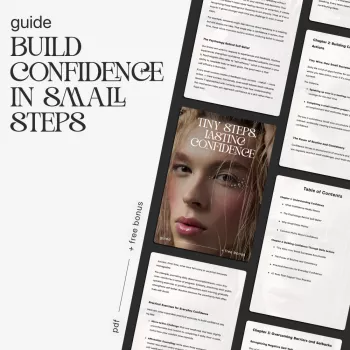
If you’d like to spend more intentional time exploring these themes, our Understanding Why You Compare Yourself and How to Stop eBook centers on comparison, confidence, and emotional awareness. It’s an option for personal reflection, not a promise that comparison will disappear.
FAQ
Why do I compare myself to others so much?
Comparison can be a way to assess your progress or seek reassurance. Uncertainty and frequent exposure to other people’s highlights can make the habit more noticeable.
How can I stop comparing myself on social media?
Notice which content brings up difficult feelings, then adjust your feed or take a break. Return your attention to priorities and actions that matter to you.
Can comparison ever be useful?
Yes. Someone else’s progress can offer inspiration or useful information, as long as you don’t use it as a measure of your personal worth.














Leave a comment