Large Round LED Mirror: RGB Color + Anti-Fog Guide
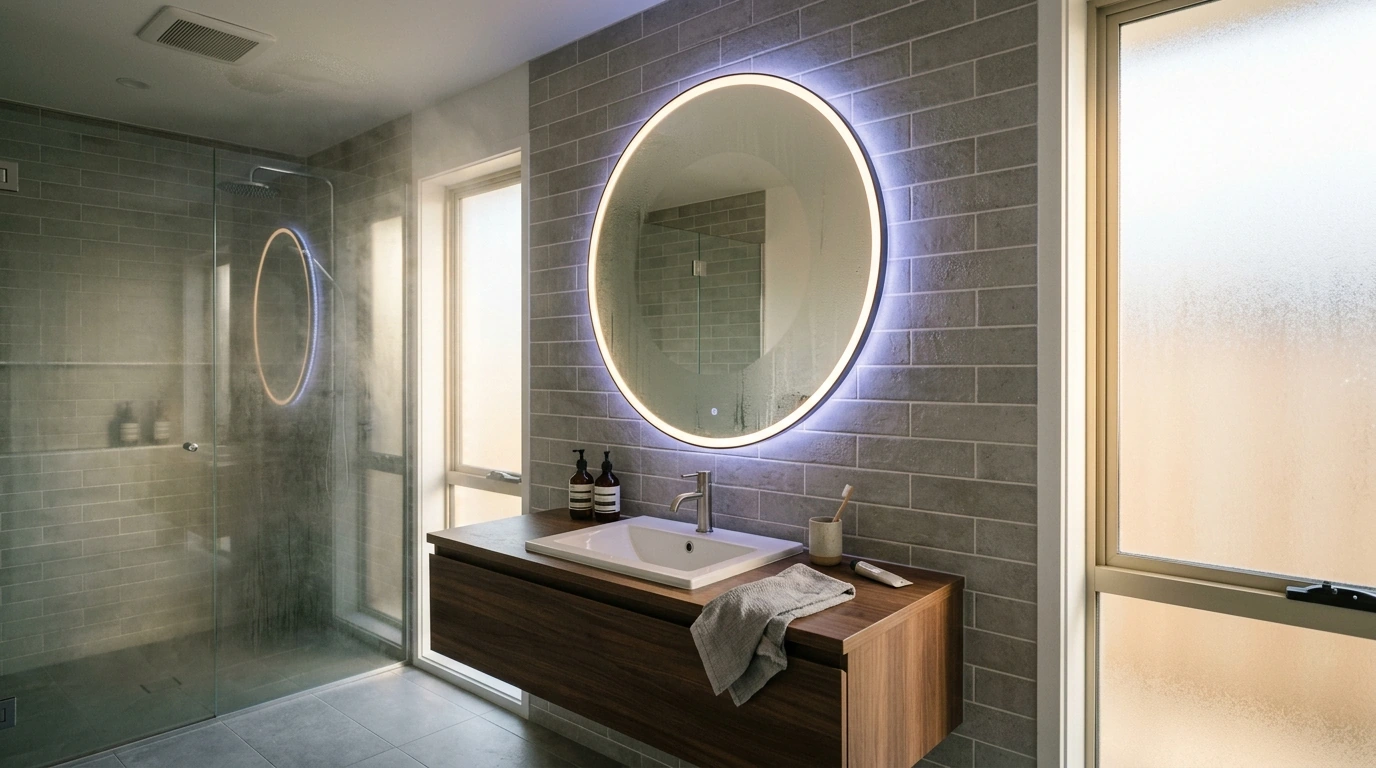
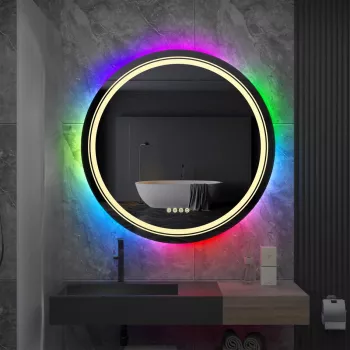
Large Round LED Bathroom Mirror with RGB Color Changing and Anti-Fog Function
A round LED bathroom mirror can do more than reflect—it can sharpen daily grooming with even front lighting, set a mood with color effects, and stay clear after hot showers with an integrated anti-fog pad. Choosing the right model comes down to lighting quality, real-world defogging performance, safe installation, and sizing that looks intentional above your vanity.
What makes this round LED mirror different
The round silhouette is a practical design upgrade as much as an aesthetic one. Circles visually soften sharp vanity lines and tile grids, and they can look equally at home above a single sink or centered between two basins—provided the diameter matches the wall space and countertop layout.
- Round profile: A clean, modern shape that reduces the “boxy” feel of many bathroom setups.
- Integrated LED illumination: Face-level light that helps reduce reliance on harsh overhead fixtures alone.
- RGB color changing: Useful for accent lighting—wind-down baths, a low-glare night mode, or a decorative glow for guests.
- Anti-fog function: Designed to keep a central viewing zone clear when the room is humid.
- Wall-mounted format: Replaces a standard mirror while adding comfort features that feel built-in.
Lighting performance and RGB color options
Lighting is the “make or break” feature for an LED mirror. LEDs placed around or behind the glass can deliver more even illumination across the face, which helps reduce shadows under the eyes and chin compared with ceiling-only lighting. That’s especially noticeable early in the morning or in bathrooms with a single overhead fixture.
RGB modes are best treated as accent light. For precise grooming—makeup matching, shaving, skincare—neutral or white light (when available) tends to be more practical. If your bathroom already has recessed lights or a ceiling fixture, the mirror’s LEDs can serve as the flattering, front-facing layer that completes the lighting plan.
Also consider glare. Position the mirror so the LEDs aren’t directly in your line of sight when seated on the toilet or when looking from the shower area. Small placement tweaks can reduce eye strain and make the light feel more “architectural” than flashy.
Common lighting goals and recommended settings
| Use case | Suggested light style | Practical tip |
|---|---|---|
| Morning grooming | Bright, even front lighting | Add overhead ambient light to avoid a high-contrast “halo” effect. |
| Nighttime bathroom visits | Low brightness or gentle color | Choose a soft color and lower intensity to avoid waking others. |
| Relaxing bath | RGB ambient color | Use color modes as mood lighting and keep the room’s main lights dim. |
| Guest-ready cleanup | Clear, neutral lighting | Wipe the mirror edges where mist can collect outside the heated zone. |
How the anti-fog function helps in real bathrooms
Anti-fog features typically rely on a thin heating pad bonded to the back of the mirror. When activated, it gently warms a portion of the glass so condensation is less likely to form. That means you’re not stuck wiping a steamy mirror (and leaving streaks) right when you need it most.
- Timing matters: Turn anti-fog on a few minutes before showering, or as soon as the bathroom starts getting steamy, for the most consistent clearing.
- Expect a “clear zone”: Many designs prioritize a central area rather than the entire surface, so you can still see clearly for grooming.
- Ventilation helps: Using an exhaust fan speeds up whole-mirror clearing and reduces lingering humidity that can stress electronics.
- Be mindful of energy use: Anti-fog generally draws more power than lighting alone, so switch it off when it’s not needed.
For broader moisture control, it’s also worth following guidance on humidity management to limit long-term bathroom issues like mildew; the U.S. EPA has practical tips on moisture and mold prevention at epa.gov/mold.
Sizing and placement tips for a round mirror
Power, safety, and bathroom-ready installation notes
- Code compliance: Reference the National Electrical Code (NEC) for general safety principles and local requirements at NFPA 70 (NEC).
- Look for safety certification: Products evaluated to recognized safety standards may carry marks from testing organizations; learn more about certification at UL.com.
- Seal penetrations: Any holes through tile or drywall should be properly sealed to reduce moisture intrusion behind the wall.
Care and maintenance for long-term clarity
Product option and complementary picks
If you want a single upgrade that improves lighting comfort and reduces post-shower frustration, the Large Round LED Bathroom Mirror with RGB Color Changing and Anti-Fog Function combines integrated illumination, color modes, and a defogging feature in one wall-mounted piece.
For a cohesive vanity refresh, pair the mirror’s shape with a basin that complements its curves and scale. The Stylish Nordic Ceramic Bathroom Sink is an option that can help keep proportions clean—especially when coordinating faucet reach and countertop depth so the sink, mirror, and lighting align comfortably in daily use.
FAQ
Does the anti-fog feature clear the entire mirror?
Most anti-fog mirrors use a heated pad that clears a central zone rather than the full surface. Ventilation and a bit of time help the rest of the glass clear faster, and turning the anti-fog on before showering improves results.
Can the RGB lighting be used as the main bathroom light?
RGB lighting is usually best as accent lighting, not the primary task light. For grooming, brighter neutral or white lighting is typically more effective, so pairing the mirror with overhead ambient lighting creates better full-room coverage.
Is a special circuit or electrician needed to install an LED bathroom mirror?
Requirements vary by location, but bathroom wiring often needs GFCI protection and code-compliant placement. If the mirror is hardwired or you’re unsure about the circuit setup, a licensed electrician is the safest route.











Leave a comment