Ask With Ease: How to Ask for Help Confidently

Asking for help is a practical communication skill, not a sign of weakness. Whether you need a hand with dinner or someone to listen while you sort through a decision, a clear request can make it easier to explain what would be useful.
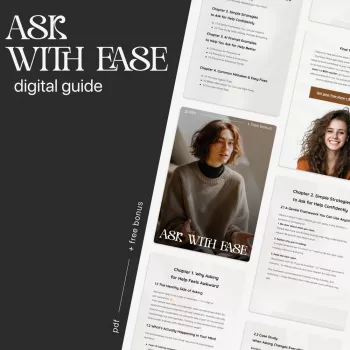
Our Ask With Ease digital guide is a self-growth resource for people who want to approach everyday requests with greater confidence. You do not have to find perfect words before you begin. Often, a small, specific request is enough to start a helpful conversation.
Why Asking for Help Can Feel Awkward
You might worry that you are interrupting someone, creating an obligation, or asking for too much. You might also fear hearing no. Those concerns are common, especially when you are used to handling things on your own.
A respectful request gives the other person information and a choice. You can say what you need without assuming they are available, and they can respond honestly. Their answer may depend on their time, energy, or circumstances rather than how they feel about you.
If you want to explore a more confident approach to these conversations, Ask With Ease offers a place to focus on that goal. You can use the idea of asking with ease as a reminder to be clear with yourself and considerate of the person you approach.
Make a Request Clear and Comfortable
Before you start, identify the kind of support you need. Are you looking for practical help, a few minutes to talk, or guidance on a task? Knowing the difference can help you ask someone who is well placed to respond.
Then make a direct request and add context that helps the person understand it. You do not need to explain every detail or apologize repeatedly. A useful request can be brief while still leaving room for the other person to decline.
Everyday Ways to Ask for Support
The examples below are general communication ideas, not confirmed excerpts from the guide. Adjust the wording to suit your relationship and situation.
| Situation | Possible request |
|---|---|
| A busy week | Could you help me with dinner tonight? |
| A difficult decision | Do you have time to talk through a choice with me? |
| An unfamiliar task | Could you show me how to get started? |
When timing matters, say so: “Could you help me before Friday?” If the task is flexible, you might add, “Whenever you have time this week.” You can also make the choice explicit with a phrase such as, “No problem if you cannot.”
Where Ask With Ease Fits Into Your Routine
Our digital guide is intended for readers interested in self-growth and more confident communication around everyday support. Consider starting with a low-pressure situation, such as asking a friend to review a short message or asking a household member to take on one errand.
Afterward, pause to reflect. What felt comfortable? Did the other person understand what you needed? Is there anything you would say differently next time? Reflection is not about grading yourself; it is a way to notice which words and settings work for you.
Practical requests can also arise when you are organizing a shared space. For example, you might ask someone to help decide where to keep bikes before choosing our floor bike parking rack stand. Talk through the available space and whose bikes need storing so the decision works for the people using it.
If a request feels difficult, you can prepare one sentence ahead of time or choose a quieter moment. Practicing does not mean you must feel completely comfortable; it means giving yourself opportunities to communicate even when a little uncertainty remains.
Give the Other Person Room to Respond
A request is not a demand. Someone may care about you and still be unable to help. A no can be disappointing, but it does not necessarily mean your relationship is at risk or that you were wrong to ask.
Try a simple response: “Thanks for considering it.” Then look for another option, such as asking someone else, changing the timing, or breaking the task into smaller pieces. If the person offers a different kind of help, you can decide together whether it meets your need.
For persistent distress or a serious concern, support from a qualified professional may be appropriate. The NHS Every Mind Matters resource also offers information about looking after your mental well-being.
Explore Ask With Ease
If you would like a resource focused on asking for everyday support, our team invites you to explore the Ask With Ease digital guide. It is listed at $6.99 USD and is in stock; price and availability may change.
There is no need to transform every conversation at once. Choose one small, specific request, give the other person room to answer, and use what you learn to guide your next step.
FAQ
How can I ask for help without feeling awkward?
Name a specific need, make a direct request, and let the other person respond freely. Some awkwardness is normal, and you can still ask even if you feel uncertain.
Who is Ask With Ease for?
Ask With Ease is a digital self-growth guide for people interested in more confident communication and asking for everyday support.
What if someone says no when I ask for help?
Accept the answer graciously, thank them for considering it, and explore another person or approach. A refusal is not necessarily a judgment of you.













Leave a comment