App-Controlled HVAC Oil Diffuser for Even Whole-Space Scent
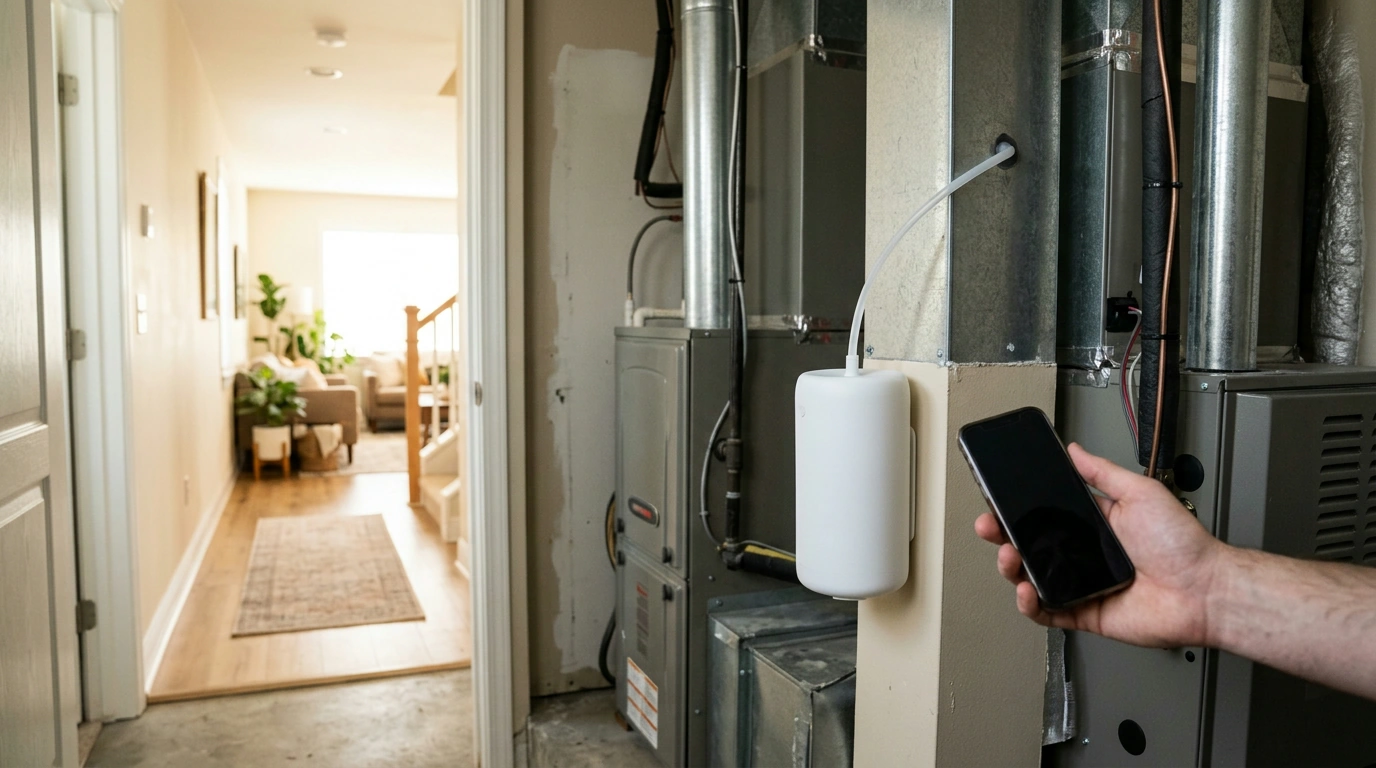
Smart HVAC Essential Oil Diffusers: App-Controlled Scenting for Homes and Businesses
A connected HVAC scent diffuser distributes fragrance through your existing air ducts, helping create a consistent atmosphere across multiple rooms without relying on several tabletop units. With app control, scheduling, and adjustable intensity, it fits everything from everyday home routines to customer-facing spaces that need predictable, repeatable scent coverage.
What an HVAC scent diffuser does (and why it feels different from a room diffuser)
Traditional room diffusers tend to scent from a single point, which can make the air feel strong near the device and faint across the rest of the space. An HVAC scent diffuser is built to work with a forced-air system, so fragrance can travel with conditioned airflow into multiple rooms—more like a background “ambient” layer than a localized burst.
- Multi-room distribution: Connects to a forced-air setup so fragrance can move through ducts into multiple zones and rooms.
- Fewer “hot spots”: Aims for even coverage rather than concentrating scent right next to the unit.
- Unobtrusive placement: In many commercial setups, the device stays near HVAC equipment, helping keep counters, shelves, and guest areas clutter-free.
- Cold diffusion style output: Many HVAC scent systems use cold diffusion/nebulizing approaches to avoid heating oils, helping preserve the aroma profile.
App control that matters day to day
App control is less about novelty and more about consistency. Instead of remembering to turn a device on and off, you can align scenting to real routines—school mornings, evening wind-down, business hours, and weekend patterns—so the space smells the way you intend at the times you care about.
- Scheduling: Set weekday and weekend programs, morning/evening routines, and opening/closing hours for businesses.
- Adjustable intensity: Tune output to match room volume, occupancy, and scent sensitivity (lighter in bedrooms, stronger in entry areas).
- Timer and burst patterns: Short diffusion cycles can help maintain steadiness while using oil more efficiently.
- Remote access: Helpful for small business owners, landlords, or multi-site operators who want consistent scent between visits.
Home uses: comfort, routines, and multi-room consistency
In a home, duct-based scenting is most noticeable when you’ve outgrown the “one diffuser per area” approach. Open floor plans, multi-story layouts, and long hallways can be tough to cover with a single tabletop unit—especially if you prefer subtle, even scent rather than a strong fragrance in one corner.
- Whole-home distribution: Better coverage for larger homes, open concepts, and multiple floors.
- Night-friendly routines: Reduce output overnight to avoid over-scenting and keep the background aroma gentle.
- Kitchen and pet areas: Intermittent scenting can support a fresher-feeling baseline (not a substitute for cleaning or ventilation).
- Guest-ready mode: Use a short, controlled boost shortly before visitors arrive—then return to a modest maintenance cycle.
Commercial uses: customer experience without constant upkeep
In customer-facing spaces, consistency shapes perception. A well-managed ambient scent can make a lobby, studio, boutique, or office feel more polished—without adding daily tasks for staff. HVAC diffusion also helps keep guest areas visually clean since the scenting hardware can stay out of sight near mechanical systems.
- Front-of-house ambience: Consistent scenting can help reinforce a calm, clean, or premium feel.
- Back-of-house practicality: Keeps counters and retail displays free of extra devices.
- Operate only when needed: Schedules aligned to opening hours reduce waste when the space is unoccupied.
- Supports zoning (as HVAC layout allows): Adjust intensity to suit different areas—like a lighter treatment near treatment rooms and a stronger level near entryways.
Installation and placement basics (what to verify before buying)
Quick capabilities checklist
| Capability | What it enables | Why it matters |
|---|---|---|
| App scheduling | Automatic on/off by time and day | Keeps scent consistent without daily attention |
| Adjustable intensity | Fine control of output | Helps prevent over-scenting and conserves oil |
| HVAC distribution | Multi-room coverage via ducts | More uniform ambience across larger spaces |
| Burst/timer patterns | Short diffusion cycles | Maintains a steady background level with less oil |
Safety, air quality, and responsible scenting
Fragrance should complement good indoor air practices, not replace them. For practical guidance on indoor air basics, resources from the U.S. EPA and ASHRAE can be helpful references when thinking about ventilation and pollutant sources.
For fragrance material standards and general safety guidance, the IFRA site is a useful reference point.
Featured option
If the goal is duct-based scenting with everyday convenience, the Smart HVAC Essential Oil Diffuser with App Control for Home & Commercial Use is designed for app-managed scheduling and adjustable output for consistent coverage.
More in-stock picks
- Floor Bike Parking Rack Stand for MTB & Road Bikes Indoor Garage Storage
- Rapid Trigger Magnetic 65% Gaming Keyboard with RGB and Hall Effect Switches
- Stylish Nordic Ceramic Bathroom Sink
FAQ
Will an HVAC diffuser make some rooms smell stronger than others?
It can, because duct layout, airflow balancing, and vent placement affect how much conditioned air (and fragrance) reaches each room. Start with low intensity and shorter cycles, then adjust over a few days; if needed, small airflow/balancing changes can help even things out.
Is it safe to run essential oils through an HVAC system every day?
Daily use is typically best approached with moderation: use quality oils, keep intensity modest, and follow the device instructions and refill/cleaning guidance. Scenting shouldn’t replace ventilation or fixing the root cause of odors, and sensitive occupants may need lighter settings or scent-free periods.
How often does the oil need to be refilled for typical use?
Refill frequency varies widely based on intensity and schedule: light “burst” patterns may last weeks, while higher output in larger spaces can require more frequent refills. Using short diffusion cycles during occupied hours usually stretches oil further than continuous operation.












Leave a comment