12V UTV Ride-On Guide: Remote Control, LEDs, Comfort
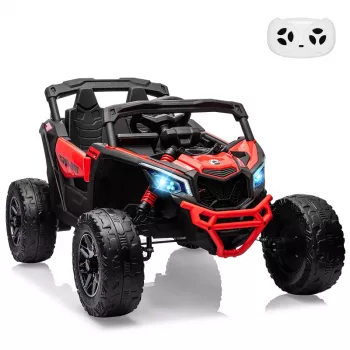
12V UTV-Style Ride-On Fun That Still Feels “Under Control”
For families who want outdoor fun that still feels manageable, a 12V ride-on UTV hits the sweet spot: kid excitement up front, parent control in hand, and just enough “real vehicle” details—like working LED lights and a roomy seat—to make every lap around the driveway feel like an adventure. Our team built this guide to help you set it up well, use the remote smartly, and keep playtime consistent week after week.
If you’re ready to get rolling, our 12V Electric Ride On UTV Car with Remote Control, LED Lights & Large Seat is in stock and designed for everyday backyard cruising with parent-ready support.
What makes this UTV-style ride-on a great everyday pick
A UTV-style ride-on is a practical “daily driver” toy because it feels substantial without demanding complicated setup or specialized terrain. You get the thrill factor kids want, plus the supervision options adults appreciate.
- 12V power brings a confident ride for driveway cruising and smooth yard paths—fun without being fussy.
- Remote control support helps you guide steering and speed while kids learn, or when the route gets crowded.
- LED lights add visibility at dusk and boost that “real UTV” look kids love.
- Large seat design focuses on comfort for longer play sessions and growing riders.
- UTV styling encourages imaginative play—errands, trail patrol, rescue missions—without needing a huge yard.
At-a-glance feature guide (quick decision helper)
| Feature | Why it matters at home | Best for |
|---|---|---|
| 12V battery power | Balances fun performance with practical charging and storage | Driveways, patios, smooth yard paths |
| Parent remote control | Adds a safety layer while kids practice steering and stopping | Younger drivers or shared spaces |
| LED lights | Improves visibility in low light and adds “real vehicle” excitement | Late-afternoon/evening play |
| Large seat | Supports comfort and a better fit as kids grow | Longer rides and bigger toddlers/kids |
Remote control: when it’s most useful (and how to use it well)
The remote is most valuable when it’s treated like “training wheels,” not a constant override. Used intentionally, it helps your child build real driving habits while you keep the environment predictable.
- Start-up practice: Use the remote for the first few sessions so kids learn steering and stopping without sudden surprises.
- Crowded zones: Take control near sidewalks, parked cars, pets, or when playdates make the route unpredictable.
- Battery-saving pacing: Smooth starts and gentle turns reduce strain and can help extend playtime per charge.
- Smooth handoff: Move from full remote driving to “kid drives, adult shadows” once confident stopping becomes consistent.
LED lights and evening play: set up a safer routine
LED lights are a big upgrade for visibility, but they’re not a substitute for a well-lit, supervised area. A simple routine makes dusk rides feel special while still staying calm and controlled.
- Pick a well-lit area: LEDs work best paired with porch lights or driveway lighting.
- Create a simple boundary: Cones, chalk lines, or a driveway “loop” keep routes predictable.
- Dress for visibility: Bright tops and closed-toe shoes support comfort and awareness.
- Time-box the last ride: Ending play before it’s fully dark keeps supervision easier and reduces trip hazards.
Comfort and fit: why the large seat matters more than it sounds
Comfort isn’t just about fewer complaints—it can also affect how steadily your child steers and how calmly they stay in position. A roomy seat helps the driver sit back, plant their weight, and keep their attention forward.
- A roomier seat helps kids sit back properly instead of perching on the edge, which supports better balance and steering control.
- Comfort supports longer, calmer play sessions—less fidgeting can mean fewer sudden turns.
- When siblings share, a more generous seating area makes switching drivers easier and reduces “it feels too tight” pushback.
- Pair comfort with good habits: teach “hands on the wheel, back to the seat, eyes forward” before each ride.
Battery and charging basics that keep playtime reliable
For general battery education beyond ride-ons, Battery University is a helpful reference: https://batteryuniversity.com/.
Simple safety setup for confident riding
The safest setups are the simplest: clear boundaries, consistent rules, and predictable surfaces. For broader toy safety guidance and recalls, you can also reference the U.S. Consumer Product Safety Commission: https://www.cpsc.gov/Safety-Education/Safety-Education-Centers/Toy-Safety.
For an overview of toy safety specifications, ASTM’s F963 standard is a useful reference point: https://www.astm.org/f0963-23.html.
Make it last: storage, cleaning, and everyday care
If you’re organizing a shared garage, our team also keeps storage simple with practical racks like the Floor Bike Parking Rack Stand for MTB & Road Bikes Indoor Garage Storage, which can help keep the ride-on’s parking area clear.
FAQ
When should the parent remote control be used instead of letting kids drive?
Use the remote during the first practice sessions, in crowded areas, near sidewalks or parked cars, and anytime your child’s stopping control isn’t consistent. A smooth handoff works best: you drive first, then let your child drive while you shadow closely, then reserve the remote for busy moments.
How long should a 12V ride-on battery be charged and how often?
Follow the included charger instructions for charging time, and build a routine of charging after play so the battery is ready next time. Avoid leaving it on the charger longer than recommended, and store/charge in moderate temperatures to help keep performance steady.
Are LED lights enough for nighttime riding?
LED lights improve visibility, but they aren’t a replacement for a well-lit, supervised riding area. Keep rides to dusk or early evening, set clear boundaries, and stay close enough to guide the route if visibility drops.










Leave a comment