Ultrasonic Humidifier Downsides: What to Know

What are the downsides of using an ultrasonic humidifier?
Ultrasonic humidifiers can add moisture quietly and efficiently, but they require careful water choices, regular cleaning, and attention to where the mist lands. The main downsides are mineral “white dust,” the possibility of dispersing contaminants from a dirty tank, and excess moisture if the unit runs too long.
Mineral dust from tap water
An ultrasonic humidifier turns water into a fine mist without boiling it. If your tap water contains minerals, those minerals can travel with the mist and settle as a pale dust on furniture and other surfaces. Distilled or demineralized water can greatly reduce this problem. A filter or cartridge may help if your model supports one, but it still needs replacement as directed.
More hands-on cleaning
Water left in the tank can encourage microbial growth. Because the humidifier releases tiny droplets, a poorly maintained unit may also send material from the water into the room. Empty and dry the tank between uses when practical, refill it with fresh water, and clean the unit according to its instructions. Distilled water reduces mineral buildup, but it does not replace cleaning.
Too much moisture in the wrong place
A visible mist can dampen a nearby wall, floor, or piece of furniture, especially if the outlet points directly at it. Position the humidifier on a stable, water-resistant surface with room for the mist to disperse. Keep it away from electronics and materials that could be damaged by moisture.
Room humidity matters, too. Aim for about 30% to 50% relative humidity and reduce the output if you see window condensation or damp surfaces. A separate hygrometer is useful if your humidifier does not display room humidity. High humidity can make a room feel clammy and encourage mold growth.
Is an ultrasonic model still a good choice?
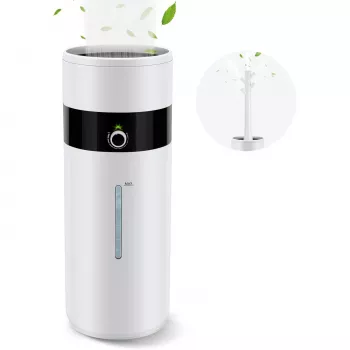
It can be, particularly if you want quiet operation and are willing to manage water quality and upkeep. When comparing models, consider tank capacity, output controls, cleaning access, and how easily you can place the unit where mist will not collect. For a closer look at a large-room option, see our guide to the 18L ultrasonic tower humidifier. Our team recommends choosing a unit you can clean consistently rather than relying on tank size alone.
FAQ
Can you put essential oils in an ultrasonic humidifier?
Only if the manufacturer specifically says the model supports essential oils and explains where to add them. Oils can damage a standard water tank or internal parts, so keep them out of the tank unless the instructions allow it.













Leave a comment