What’s the Point of a Reversible Ceiling Fan?
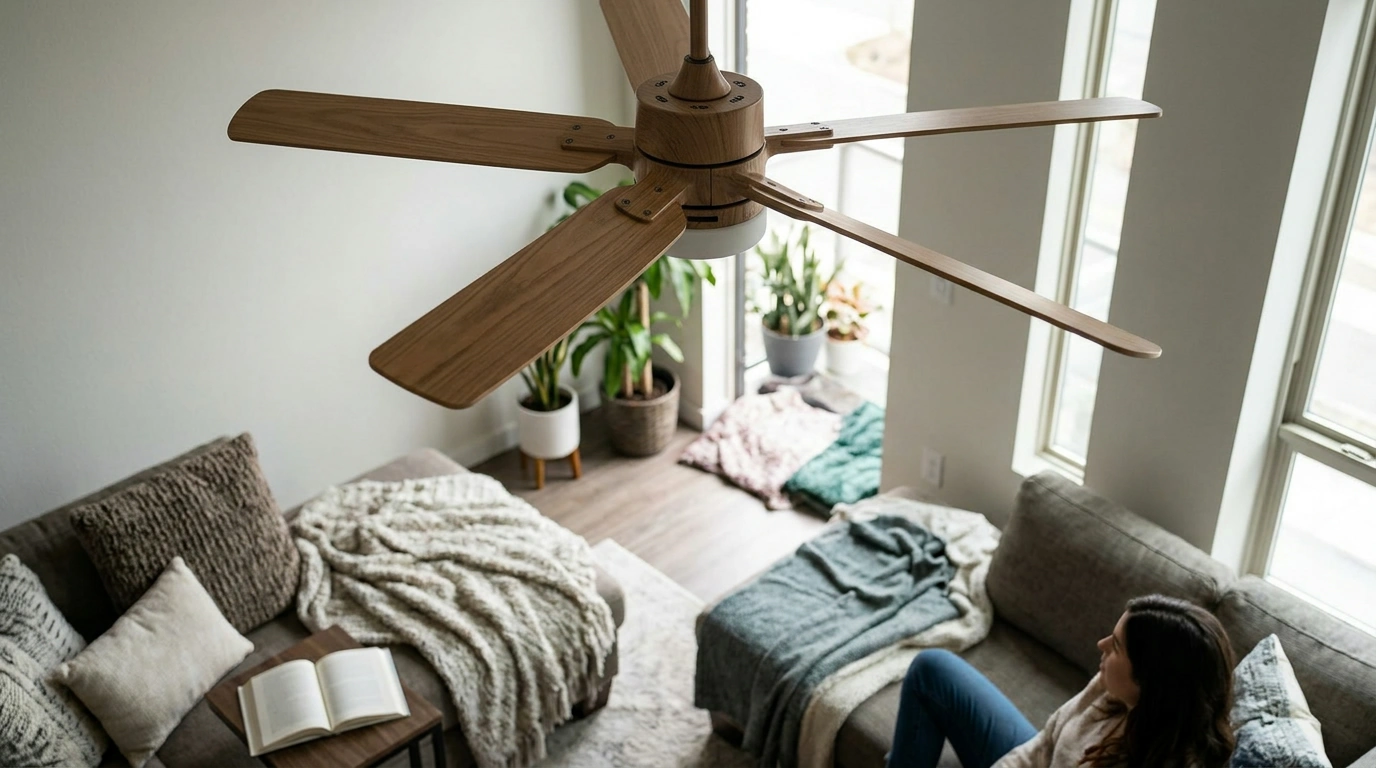
What’s the point of a reversible ceiling fan?
A reversible ceiling fan lets you change the direction its blades turn, so you can use airflow differently as the seasons change. In warm weather, it creates a breeze that helps you feel cooler. In cool weather, it can help circulate warm air that collects near the ceiling without blowing a strong draft directly on you.
The fan does not heat or cool the air itself. Its value is in moving air where you need it, which can make a room feel more comfortable alongside your heating and cooling system.
How does reversing a ceiling fan help in summer?
For warm-weather use, set the fan to turn counterclockwise as you look up at it. This generally pushes air downward, creating a breeze that helps moisture evaporate from your skin. The resulting wind-chill effect makes you feel cooler, even though the room temperature stays the same.
Choose a speed that feels comfortable rather than automatically using the highest setting. Because the breeze cools people rather than the room, turn the fan off when you leave to avoid using electricity unnecessarily.
Why reverse the fan in winter?
In cooler weather, run the fan clockwise at a low speed as you look up at it. This creates a gentle updraft that can help move warmer air near the ceiling down along the walls and back into the room.
The effect is most useful where warm air tends to collect overhead, such as in rooms with high ceilings. A low setting is important: a noticeable breeze against your skin may make you feel cooler instead. Whether it reduces heating costs depends on your room, heating system, and thermostat settings.
How do you change the direction?
Some fans use a small switch on the motor housing, while others have a reverse button on the remote or wall control. Turn the fan off and wait for the blades to stop before changing a physical switch. Follow the manufacturer’s instructions for your model, especially if its remote has a dedicated reversing function.
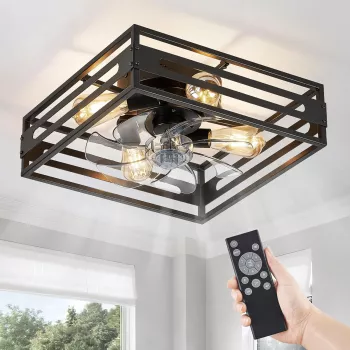
If you’re considering a compact option, our guide to a low-profile square caged flush-mount ceiling fan with light and remote can help you explore the style and its features. Our team recommends choosing a fan that fits your room and provides controls you’ll find easy to use year-round.
FAQ
Does a ceiling fan lower the temperature of a room?
No. A ceiling fan moves air rather than cooling it, but its breeze can help you feel cooler by increasing evaporation from your skin.














Leave a comment