Massage Gun w/ Adjustable Arm, 6 Heads & Heat Relief
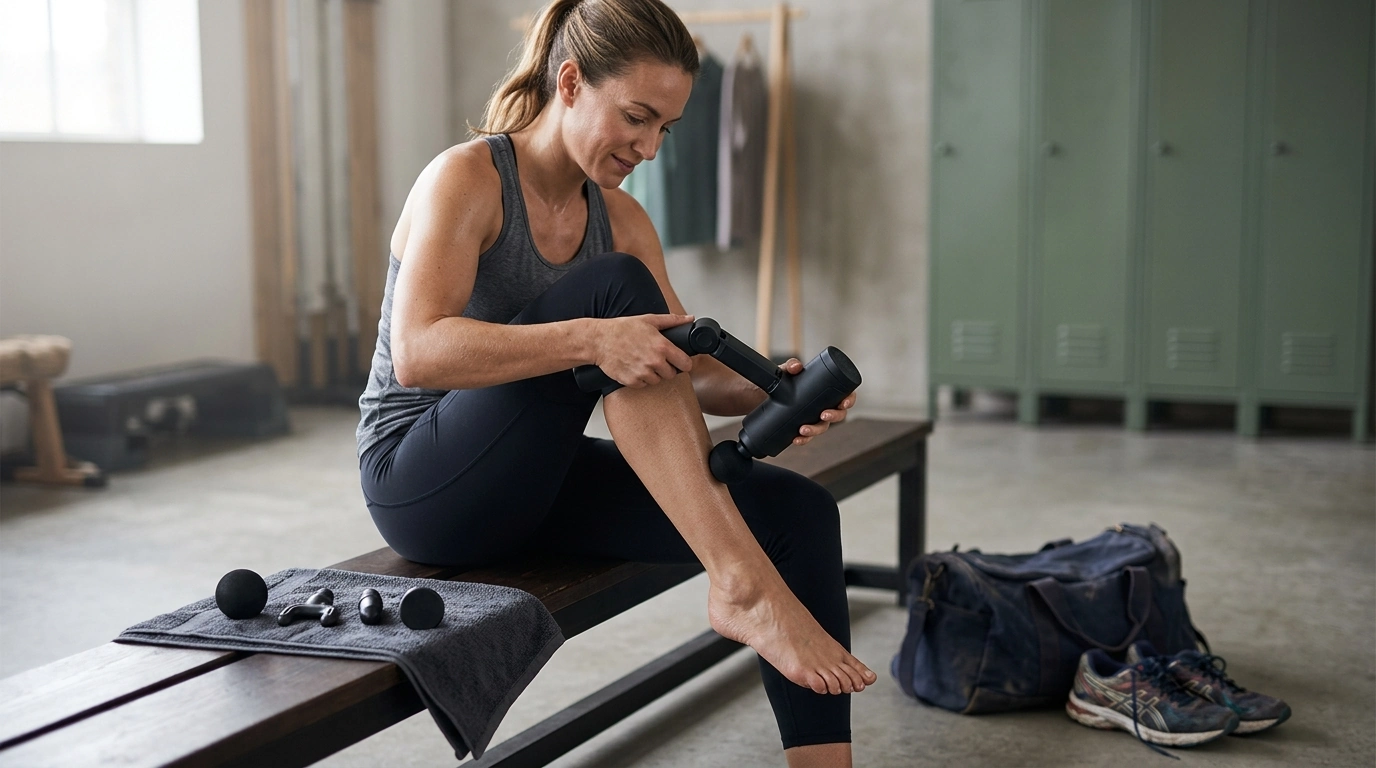
Portable Muscle Massage Gun with Adjustable Arm, 6 Heads & Hot Compress
Recovery tools should fit real life: quick sessions, hard-to-reach spots, and the option to add soothing warmth when muscles feel tight. Our portable muscle massage gun pairs percussive massage with an adjustable arm for better angles, six interchangeable heads for targeted work, and a hot compress feature to help you relax areas that feel stiff after training, long desk days, or travel.
What this massage gun is built to solve
- Reaching common trouble zones without awkward twisting: upper back, mid-back, hamstrings, calves, and glutes
- Switching between broad muscle groups and smaller, sensitive areas with different head shapes
- Layering warmth with massage for a more comforting wind-down when muscles feel tight
- Keeping recovery portable for gym bags, office drawers, and weekend trips
Core features that shape the experience
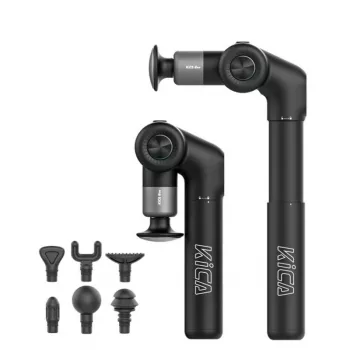
- Adjustable arm design: improves angles and contact so pressure can stay consistent while your wrist and shoulder do less work
- Six massage heads: helps you match the contact surface to the muscle group instead of forcing one head to do everything
- Hot compress function: adds heat for relaxation-focused sessions and post-activity decompression
- Portable form factor: designed for short, repeatable sessions instead of complicated setups
Using the adjustable arm: better angles, steadier pressure
The adjustable arm is what makes this style of massage gun feel “usable” on the spots you normally skip. Our team’s best tip: set your arm angle first, then choose your head. When the head sits flatter against the muscle, it’s less likely to skip, pinch at the edges, or tempt you into pressing too hard.
- Upper back and shoulder blade areas: choose an angle that allows gentle, even contact without pressing into bony landmarks.
- Calves and hamstrings: a straighter arm position often helps keep pressure uniform along the muscle belly.
- Glutes and hips: angle the arm so your handle position stays comfortable while you move slowly across the area.
- Avoid lingering on joints and bones: stay on soft tissue zones and keep moving gradually.
Choosing among the 6 heads (and when to swap)
If you’re unsure where to start, go broad and gentle first. You can always “zoom in” later, but starting too focused is the fastest way to feel sore the next day.
- Start broad, then get specific: begin with a larger surface head for 30–60 seconds to warm the area, then switch to a more targeted head if needed.
- Use a gentler head for sensitive areas: forearms, around the shoulder, and near the neck generally respond better to softer contact.
- Use a focused head sparingly: targeted heads are best for short passes on tight spots, not long holds.
- Match head to goal: relaxation sessions usually feel better with broader contact; precision work is for brief touch-ups.
- Stop if numbness, sharp pain, or tingling appears: reduce pressure, change location, or pause.
Hot compress: where warmth fits into recovery
Heat can be a comfort multiplier when you’re aiming to downshift—especially on stiff, tight-feeling areas. To keep it safe and effective, let warmth do the relaxing and keep massage intensity moderate.
- Best for stiffness: warmth can help muscles feel more pliable before gentle massage passes.
- Useful for cooldown routines: after activity, heat plus light pressure can help you shift from “training mode” to rest.
- Timing idea: use heat first for a few minutes, then massage; or finish with heat for a calmer after-feel.
- Skip heat on fresh injuries or visible swelling: when in doubt, choose massage without heat and consult a clinician for persistent issues.
For general guidance on heat therapy, you can also reference Mayo Clinic’s overview of heat therapy and NIH MedlinePlus instructions for heat therapy.
Simple routines for common needs
Safety and comfort notes (for better results)
If you’d like a broader overview of massage therapy benefits and considerations, Cleveland Clinic provides a helpful summary: Massage Therapy: What It Is, Types & Benefits.
Quick guide: which head and approach to use
| Goal / Area | Suggested head approach | Pressure & time |
|---|---|---|
| Large muscle groups (quads, glutes, hamstrings) | Broader head first, switch to medium focus if needed | Light–moderate, 60–120 sec per area |
| Calves and forearms | Medium contact; avoid overly sharp focus | Light–moderate, 30–90 sec per area |
| Upper back and traps | Gentle/broader contact; careful near neck | Light, 30–60 sec per area |
| Targeted tight spots | Smaller/more focused head in short passes | Light–moderate, 10–20 sec per pass |
| Relaxation with warmth | Broader head + hot compress | Light, 3–8 min total session |
What to expect from a well-matched massage session
Product page and availability
- Current availability: in stock
- Portable Muscle Massage Gun with Adjustable Arm, 6 Heads & Hot Compress — $151.01
More in-stock picks from our store
- Floor Bike Parking Rack Stand for MTB & Road Bikes Indoor Garage Storage — $50.82
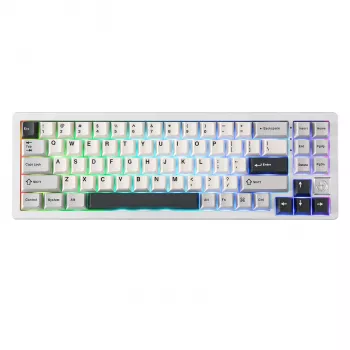
- Rapid Trigger Magnetic 65% Gaming Keyboard with RGB and Hall Effect Switches — $109.01
FAQ
Can the hot compress be used at the same time as massage?
Heat is intended to complement massage, but comfort comes first. Many people prefer warming the area for a few minutes before gentle passes, or finishing with warmth for a calmer wind-down, rather than maxing out heat and pressure together.
How long should a session be on one muscle group?
For most areas, keep it short and repeatable—often about 30–120 seconds per muscle group—while keeping the head moving. Spending too long in one spot can increase tenderness instead of reducing it.
Which head should be used first if unsure?
Start with the broadest or softest head at a low intensity to see how your body responds. Switch to a more focused head only if you still need precision, and avoid sharp, narrow contact on sensitive areas.











Leave a comment