Castle-Style Full-Over-Full Bunk Bed With Slide & Storage
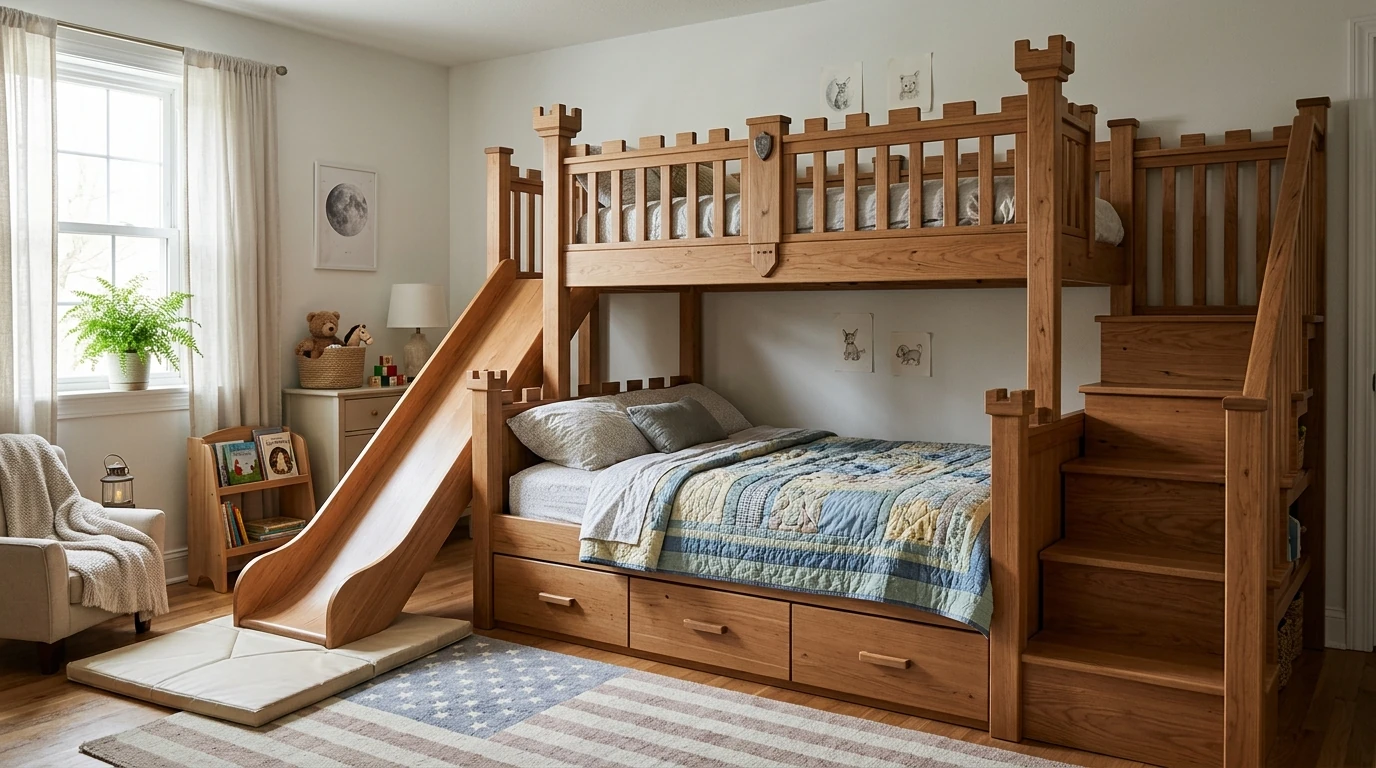
Castle-Style Full-Over-Full Bunk Bed: a room centerpiece that earns its footprint
Turn bedtime into a built-in adventure without giving up the practical things a shared room needs: real sleeping space, predictable storage, and an everyday layout that helps kids move safely. Our team designed the Castle Style Full Over Full Kids Bunk Bed with Slide, Stairs & Storage Drawers as a room anchor—two full-size sleep surfaces paired with a slide for play, stair access for confident climbing, and drawers that keep pajamas, blankets, and toys from spreading across the floor.
What this bunk bed brings to a family room
- Two full-size sleep areas to support siblings, sleepovers, or a growing child who needs more space than a twin.
- A castle-inspired silhouette that feels like part of the room’s theme—not an afterthought you have to decorate around.
- Stairs plus a slide so kids can go up with steadier footing and come down with a fun exit route.
- Storage drawers built into the footprint, helping reduce the need for extra dressers or toy bins.
- One cohesive zone for sleep, storage, and play—often simplifying the rest of your layout planning.
Quick planning checklist (measure once, enjoy daily)
| Item to confirm | What to measure or check | Why it matters |
|---|---|---|
| Room footprint | Open floor space where the bed will sit (length × width) | Ensures the stairs and slide don’t block doors, closets, or pathways. |
| Ceiling height | Floor-to-ceiling distance above the top bunk area | Helps keep the top bunk comfortable for sitting up and safer for active sleepers. |
| Walkway clearance | Space around the stairs/slide side and the “landing” area | Supports safer traffic flow during morning routines and bedtime. |
| Storage needs | What should live in the drawers (clothes, linens, toys) | Prevents “nice-to-have” drawers from becoming overflow clutter. |
| Sleepers’ routines | Nighttime bathroom trips, early risers, nap schedules | Determines whether stairs placement and drawer access fit real life. |
Design features that do the heavy lifting: slide, stairs, and drawers
In a kids’ room, the best furniture choices reduce daily friction. This castle-style setup does that by giving movement a predictable path and giving clutter a clear home.
- Stair access supports kids who feel more secure stepping up than climbing a vertical ladder—especially helpful in shared rooms where routines overlap.
- The slide creates a natural “down” route that keeps movement organized: up the stairs, down the slide during playtime, and fewer bodies crowding a single access point.
- Storage drawers make cleanup simpler because categories stay consistent—pajamas in one drawer, extra sheets in another, toys in a third.
- Castle styling can help bedtime transitions feel less like a negotiation because the bed is a destination kids enjoy.
- One integrated structure can free wall space for a desk, a reading corner, or open play area instead of extra storage furniture.
Setting up the room around it (without crowding the fun)
- Protect the slide landing zone by keeping it clear of hard bins, sharp-edged furniture, and scattered toys. This is where energy concentrates.
- Add softness where it counts with a low-pile rug or play mat at the slide exit if your layout allows, and keep it easy to vacuum.
- Use light for calmer nights by placing nightlights along the path from the bed to the door or bathroom to reduce stumbles in a shared room.
- Assign storage by child so mornings move faster and “Where’s my shirt?” doesn’t turn into a daily routine.
- Place bedside add-ons carefully so a small shelf or table doesn’t interfere with stairs access—and so books and water bottles don’t tumble into the slide area.
Everyday safety and comfort habits worth building
Bunk beds are daily-use furniture, so small habits matter. For broader guidance, we recommend reviewing the CPSC bunk bed requirements and the ASTM F1427 bunk bed safety specification. For age-appropriate sleep considerations, the American Academy of Pediatrics is a helpful reference point.
- Match the top bunk to readiness: use it for a child who follows rules consistently; reinforce “feet first,” “one at a time,” and “no roughhousing up top.”
- Keep guardrails clear: avoid piling bulky comforters or oversized pillows against rails where they reduce usable space.
- Keep drawer loads sensible: drawers are great for clothes and linens; store heavier collections elsewhere to reduce strain.
- Re-tighten hardware periodically: shared kids’ furniture sees a lot of motion, especially when play is part of the design.
- Set one simple traffic rule: stairs are for up/down, slide is for playtime—this keeps bedtime calmer when someone is trying to sleep.
A simple decision guide: is this the right bunk bed style?
Product picks from our shop
FAQ
How much space should be left at the bottom of the slide?
Keep a clear landing zone in the direction the slide exits so your child can step away safely after coming down. Measure the slide’s run and leave that floor area open—free of hard furniture, sharp corners, and loose toys.
Are stairs better than a ladder for kids?
For many kids, stairs feel more stable and predictable than a vertical ladder, which can support more confident climbing. Your room layout and your child’s readiness both matter, but stairs are often the easier day-to-day choice in shared spaces.
What should go in the storage drawers for easiest daily cleanup?
Use the drawers for high-rotation items like pajamas, everyday clothes, extra sheets, and a defined set of toys. Assign drawers by child or by category, and avoid very heavy items so opening and closing stays smooth.










Leave a comment