Heavy-Duty Ratchet Chain Binder Set: Safer Tightening
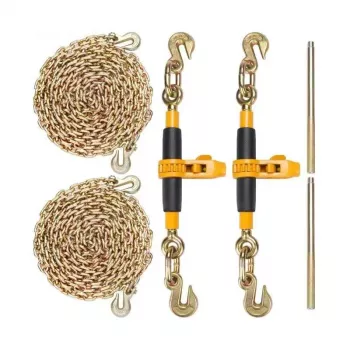
Heavy-Duty Ratchet Chain Binder Set for Secure Load Tie-Down
A ratchet chain binder set is built for tightening transport chains with controlled leverage, helping keep equipment, vehicles, and heavy materials stable on trailers and flatbeds. With incremental ratcheting, you can dial in tension in smaller steps, which supports repeatable, inspection-friendly securement. Below is a practical guide to how these binders work, where they’re used, what to verify before each trip, and how to keep them performing reliably over time.
What a Ratchet Chain Binder Set Does
At its core, a ratchet chain binder shortens a section of chain to remove slack and maintain clamping force on the load. That tension helps reduce shifting during hauling, recovery, and on-site positioning where sudden movement can damage cargo or compromise handling.
- Tensions transport chain to reduce load shift during hauling, recovery, and on-site positioning.
- Ratchet mechanism applies force in small increments for more control than snap/lever styles.
- Commonly paired with Grade 70 transport chain (or other rated chain) and compatible hooks/ends.
- Useful for securing machinery, skid steers, pallets, steel, logs, and other high-weight cargo.
Because the ratchet advances in short strokes, it’s easier to tighten gradually, confirm alignment, and stop at the right point without “overshooting” tension.
Why Ratchet-Style Binders Are Chosen for Heavy Loads
Ratchet binders are often selected when consistency and controlled tightening matter—especially for fleets that want predictable securement habits across different drivers and routes.
- Controlled tightening helps reduce sudden release risk compared with lever binders.
- Fine adjustment makes it easier to reach proper tension without overloading components.
- Works well when access is limited and small ratchet strokes are needed.
- More predictable tensioning supports consistent securement practices across a fleet.
On crowded decks or awkward anchor locations, the ability to “click” the ratchet a little at a time can make securement more manageable while keeping hands away from pinch points and snap-back zones.
Specifications That Matter Before Buying
Not all chain binders are interchangeable. A binder set should match your chain size, your working load needs, and the way you connect to anchor points.
- Working Load Limit (WLL): choose binder and chain with ratings that meet or exceed the securement requirement.
- Chain size compatibility: match binder to the chain diameter (for example, 5/16 in or 3/8 in) and ensure hooks fit properly.
- End fittings: grab hooks vs slip hooks; verify intended engagement (chain link vs wider attachment points).
- Handle length and clearance: longer handles increase leverage but require more swing/ratchet space.
- Corrosion resistance: coatings help in wet, salty, or muddy environments.
- Identification: stamped/marked ratings are important for inspections and compliance.
Quick Fit-and-Check Guide
| Check item | What to confirm | Why it matters |
|---|---|---|
| WLL marking | Binder and chain are both rated and legible | Avoids underspec gear and supports inspections |
| Chain size match | Binder range includes the chain size being used | Prevents poor engagement or jamming |
| Hook type | Grab hook seats fully on a chain link; latch if included operates freely | Reduces slip-off risk under vibration |
| Thread/gear condition | No deformation, excessive play, or grinding | Maintains smooth tensioning and holding power |
| Overall wear | No cracks, bent components, or severe corrosion | Damaged hardware can fail under load |
How to Use a Ratchet Chain Binder Safely
Safe securement starts before the chain ever tightens. A small problem—like a twisted link or side-loaded hook—can become a failure point once the trailer hits bumps, braking forces, or a sharp turn.
For regulatory context and securement fundamentals, review the Federal Motor Carrier Safety Administration (FMCSA) cargo securement rules. For WLL and tie-down basics, the Web Sling & Tie Down Association (WSTDA) is another widely referenced industry resource.
Maintenance and Storage for Long Service Life
Common Mistakes to Avoid on Trailers and Flatbeds
Product Option: Heavy-Duty Ratchet Chain Binder Set
If you want controlled tensioning and repeatable securement, the Heavy-Duty Ratchet Chain Binder Set is a purpose-built option for demanding tie-down jobs. It’s best suited for heavy equipment transport and jobsite use where incremental adjustment helps you fine-tune tension without relying on snap-over force.
For organizing a garage or trailer staging area between runs, you may also want a dedicated parking solution like the Floor Bike Parking Rack Stand for MTB & Road Bikes Indoor Garage Storage to keep bikes upright and out of the way of load securement gear.
FAQ
What’s the difference between a ratchet binder and a lever binder?
A ratchet binder tightens in controlled, incremental strokes, making it easier to fine-tune tension and reduce the chance of sudden snap-back. A lever binder uses a snap-over action that can be faster, but it can also release abruptly if not handled carefully or if the load shifts.
How do working load limits apply when using chain and binders together?
The entire tie-down assembly is limited by the lowest-rated component, whether that’s the chain, the binder, the hook, or an attachment point. Matching WLL ratings and keeping markings legible helps avoid underspec setups and supports inspections.
How often should chain binders be inspected or replaced?
Inspect binders and chains before each use and schedule regular in-depth checks based on frequency of hauling and job conditions. Replace or retire gear with bending, cracks, severe corrosion, damaged threads, elongated hooks, or unreadable WLL markings.














Leave a comment